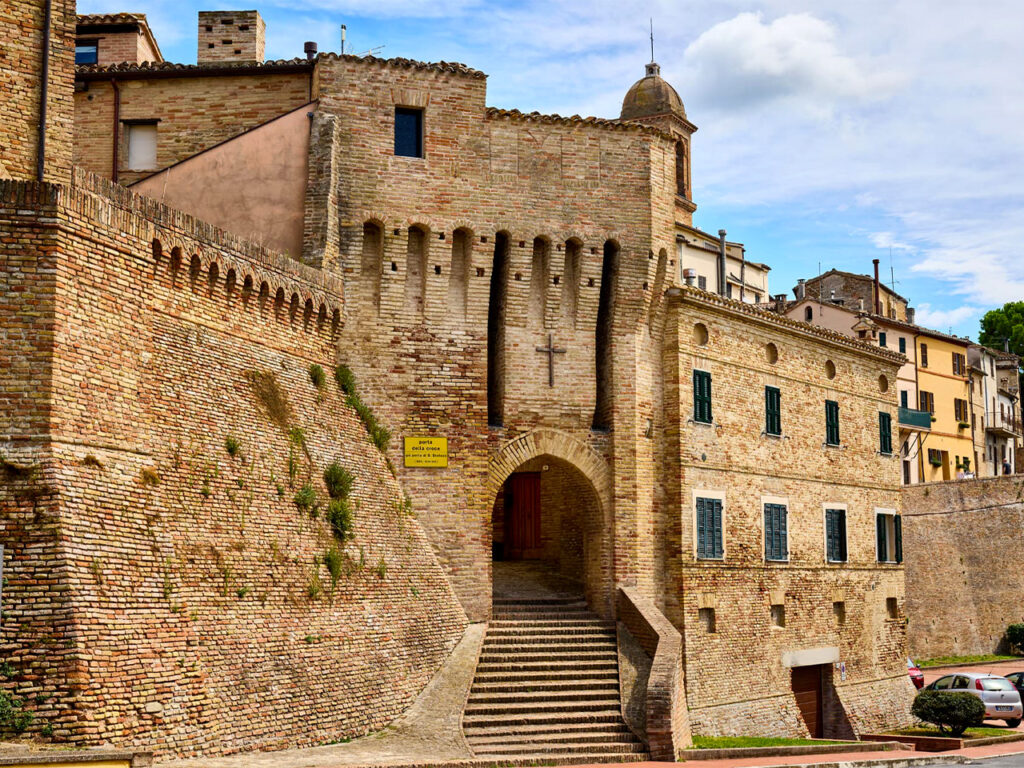
An interesting walking tour of Serra de’ Conti.
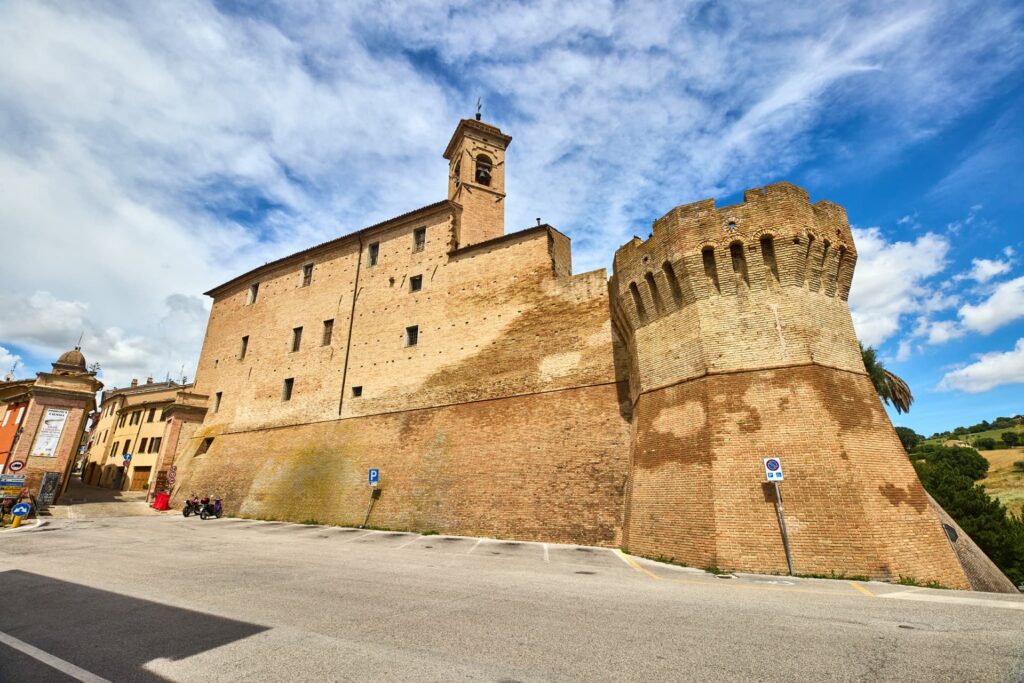
CITY WALLS AND "COPERTELLE"
The Walls – The fortified perimeter encircles the town centre, which dates back to the 13th century and was first transformed in the late Middle Ages and then again in the modern era as a result of economic and social changes. The city walls are punctuated by ten towers and a monumental fortified gate
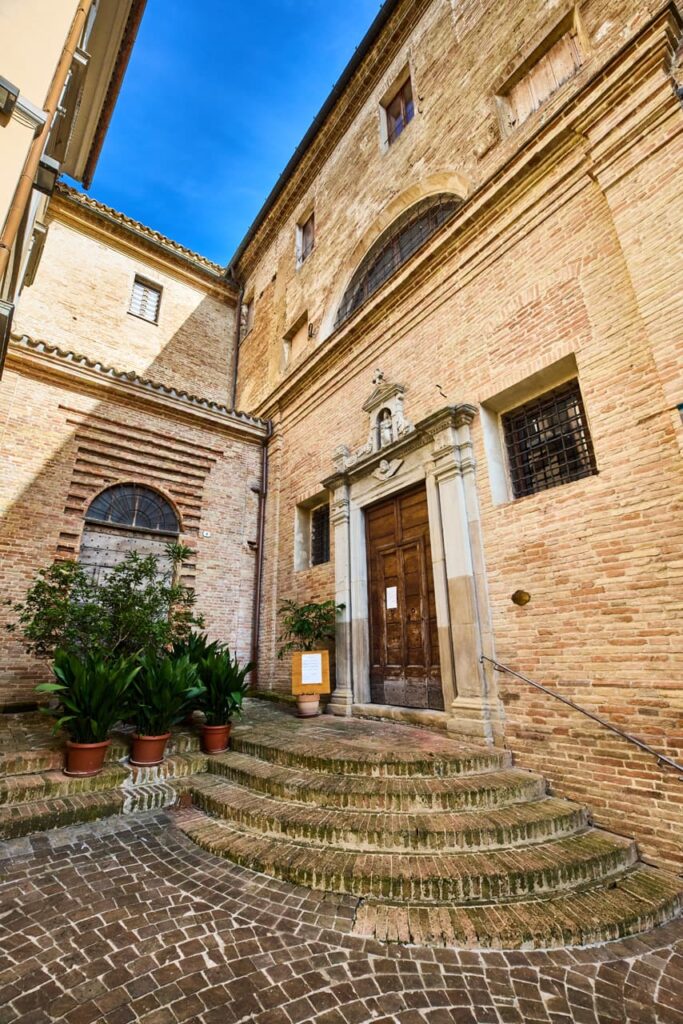
Monastery of Santa Maria Maddalena
The present-day complex of the Monastery of Santa Maria Maddalena stands on the ruins of an earlier building first documented in the first half of the 14th century, which had already been abandoned by the beginning of the following century due to its precarious structural condition. The assets, however, remained and were subsequently incorporated into the patrimony of the Curia of Senigallia, whilst a considerable bequest, the Piccini inheritance, was managed directly by the Fabbrica di San Pietro.
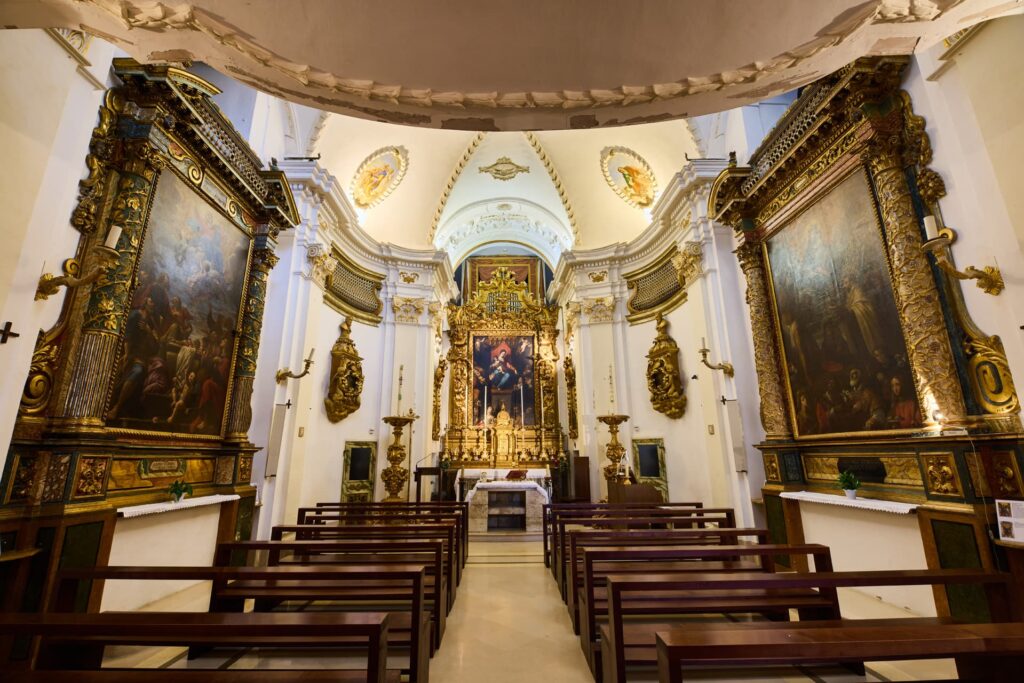
Church of Santa Maria Maddalena
Work on the construction of the Church of Santa Maria Maddalena began in 1603, some twenty years after the reopening of the convent—a much larger complex of which the church forms part—and was not completed until the end of the century. The building, incorporated into the monastic complex of the same name, is notable for the distinctive elliptical shape of its floor plan, which seems to evoke the gentle openings and closures of the curvilinear space designed by Borromini for the Roman church of Santa Maria dei Sette Dolori (1643–1646) of the cloistered Order of the Augustinian Oblates.
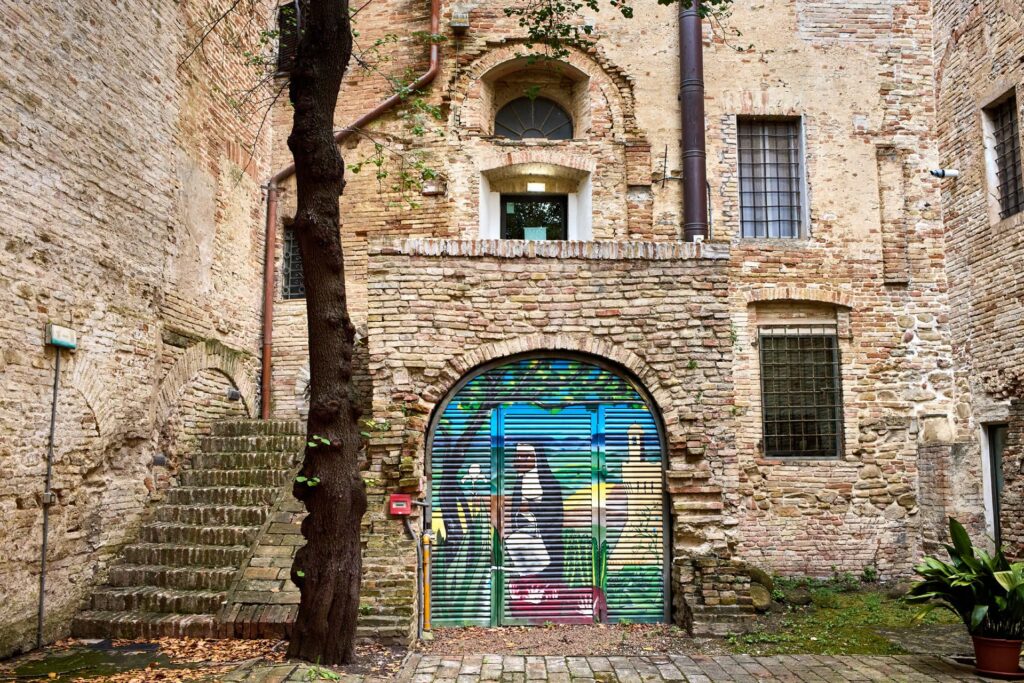
Museum of Arti Monastiche
The Town Hall complex houses the Museum of Monastic Arts, ‘Le Stanze del Tempo sospeso’, which displays artefacts from the nearby Monastery of St Mary Magdalene in a series of evocative rooms. Visitors to this museum are not mere spectators, but active participants, invited to step into the shoes of various characters featured in an audio-guided theatrical tour.
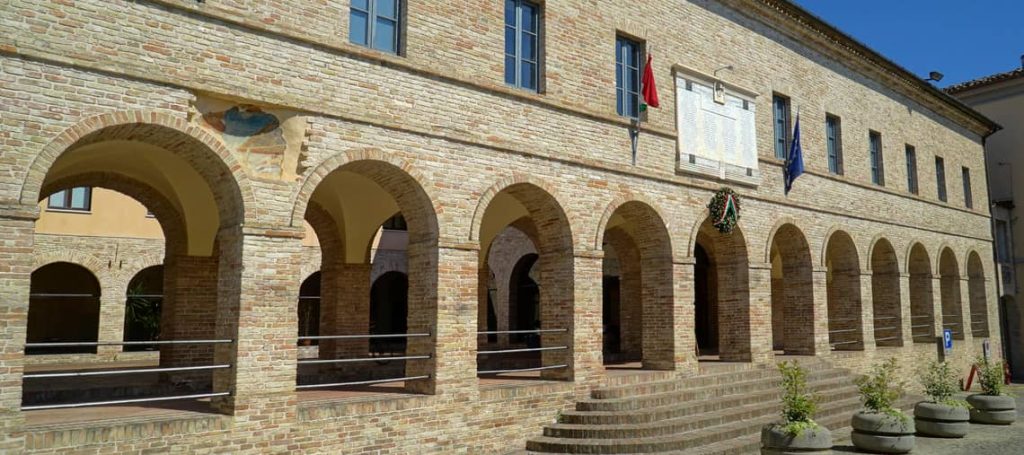
Cloister of San Francesco
The former convent of San Francesco, belonging to the Franciscan Conventuals and dating back to the early 14th century, now houses the Town Hall.
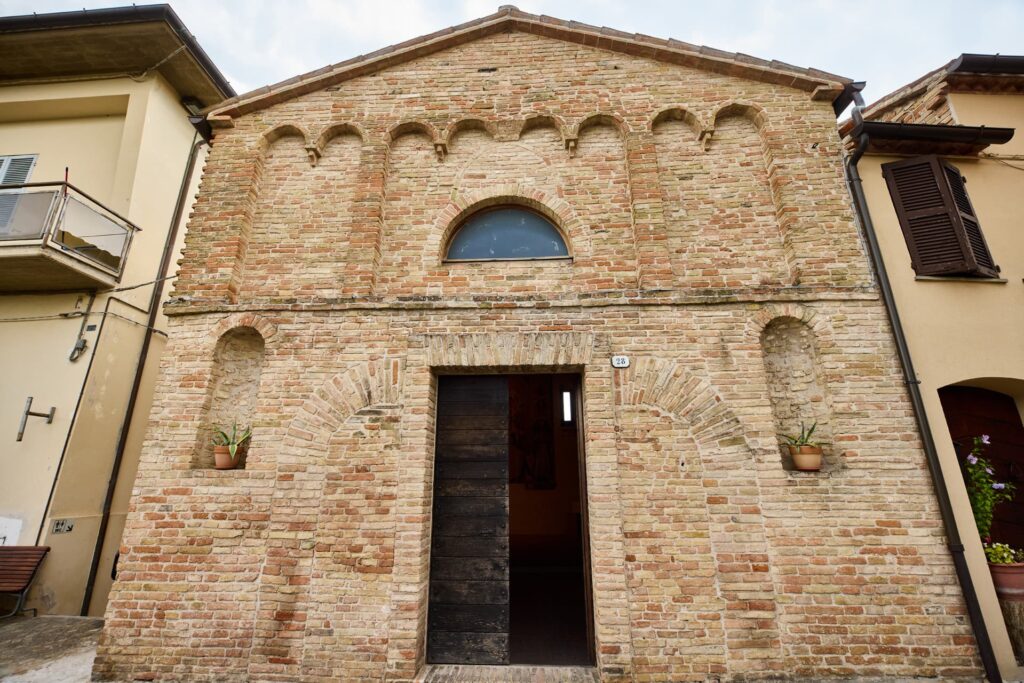
Church of Santa Croce
Dating from the second half of the 16th century, it has a single nave with a small crypt. Restoration work on the Church of Santa Croce carried out in the 1990s brought to light a fresco on the back wall, attributed to the early work of Giovanni Battista Lombardelli (c. 1537 – 1592), a painter from the Marche region who was active from 1574 in Ostra Vetere and Serra de’ Conti, where he stayed for a few years before moving to Perugia, Rome and Loreto, drawn there by various commissions.
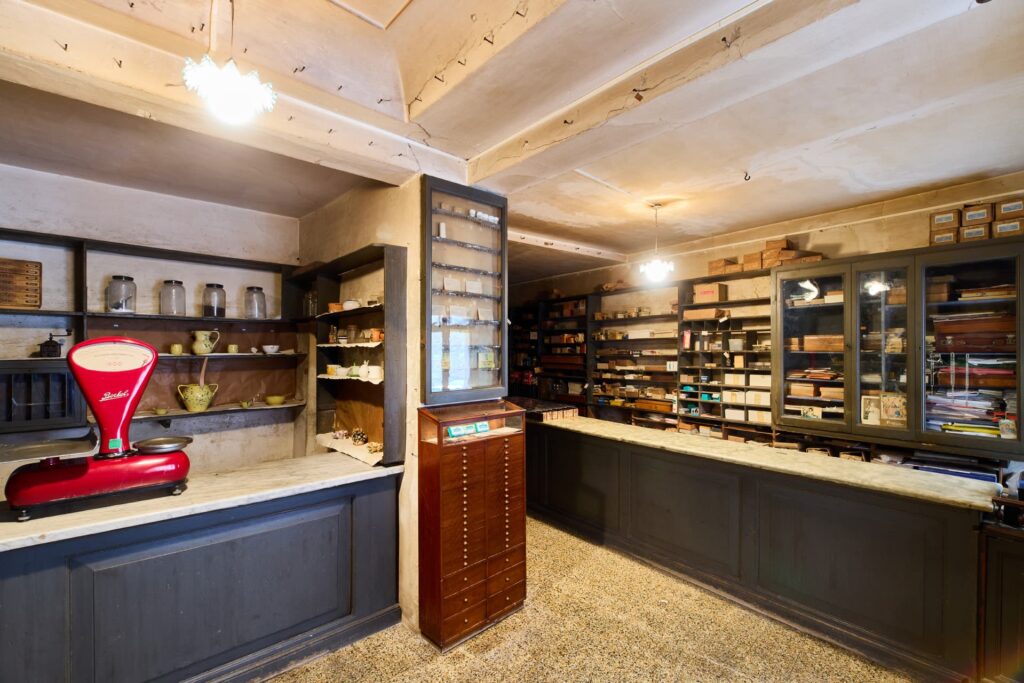
Paggi Multistore
L’Antica Bottega Paggi retains all the charm of the old village shops. The original shelving, the objects and tools on display, together with the ceiling and flooring, tell the story of a place that time has failed to touch. Opened in the mid-19th century by the Paggi family, it began as a shop selling groceries and detergents, soon becoming a hub for the village thanks to the presence of an oven made available to families who did not have one of their own. In the early 20th century, Tito Paggi, the founder’s son, transformed the business into a hardware shop. In 1942, he also began printing black-and-white postcards depicting the most picturesque views of Serra de’ Conti: an extraordinary initiative that gave rise to the first example of promotional tourism publishing in the area. A shop that is not just a shop, but a precious fragment of local history.
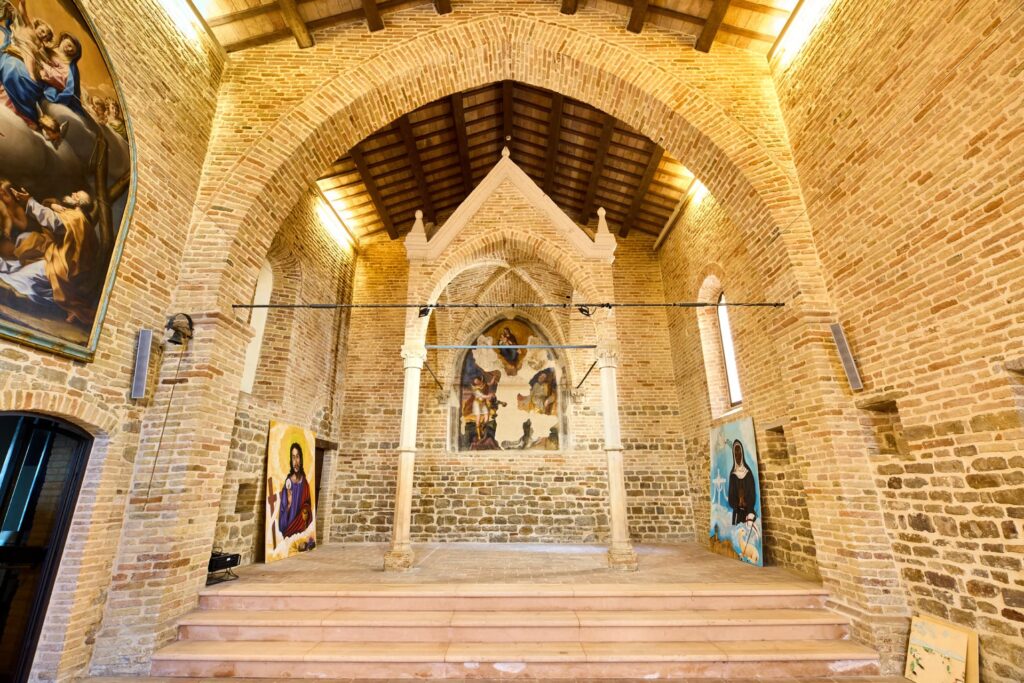
Church of San Michele
Built in 1290 by the Camaldolese Benedictine monks of the Abbey of Santa Maria di Sitria, the Church of San Michele was remodelled between 1442 and 1480. The date of the church’s foundation is inscribed on the keystone of the side portal.
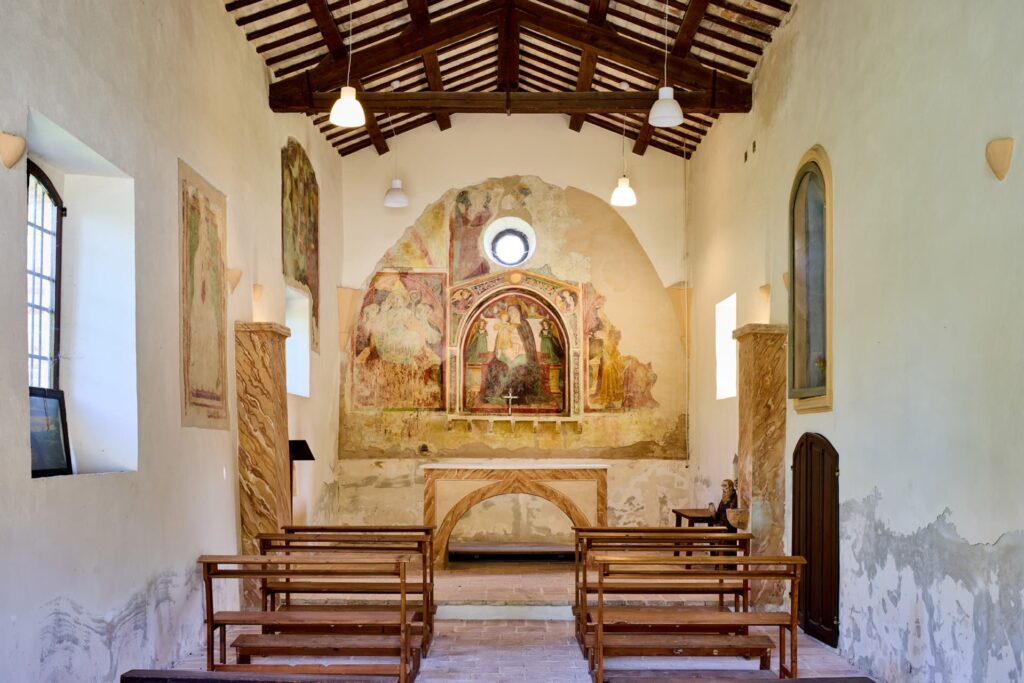
Church of San Fortunato
The ancient rural church of San Fortunato, founded by the community of Serra de’ Conti in the 13th century and remodelled in the second half of the 15th century, was partially restored in the early 1980s.
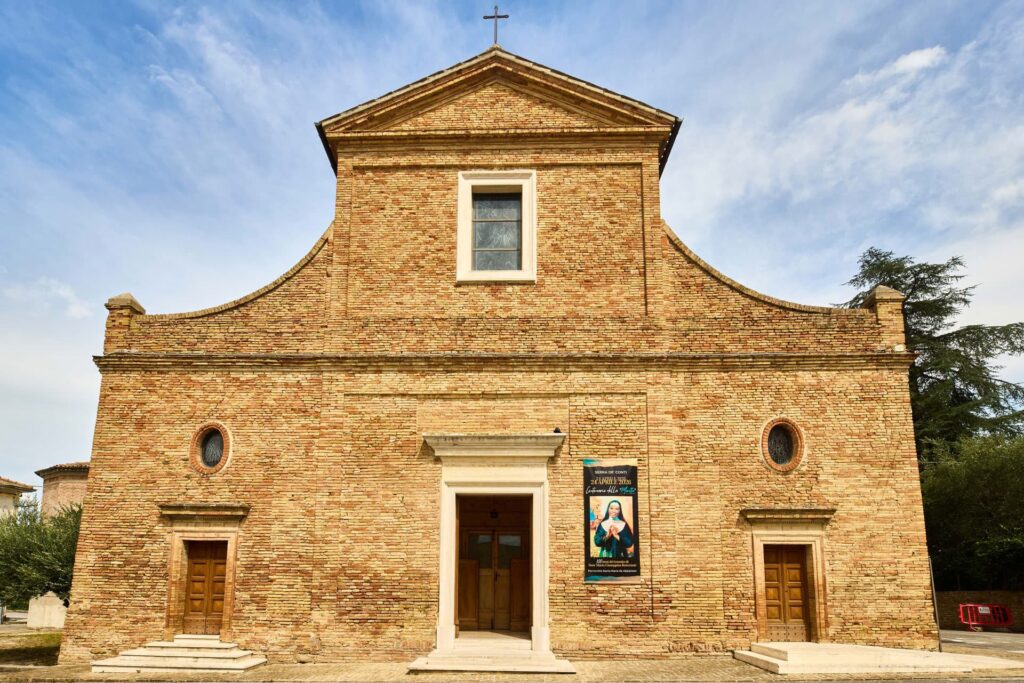
Parish Church of Santa Maria de Abbatissis
Built in the first half of the 13th century, the parish church of Santa Maria delle Abbadesse belonged to the Benedictine Abbey of Santa Croce in Sassoferrato in 1252. In 1320, the Blessed Gherardo, a native of Serra de’ Conti, was appointed prior there, called upon to lead the Benedictine hospice of S. Maria delle Abbadesse, where several monks lived in community.
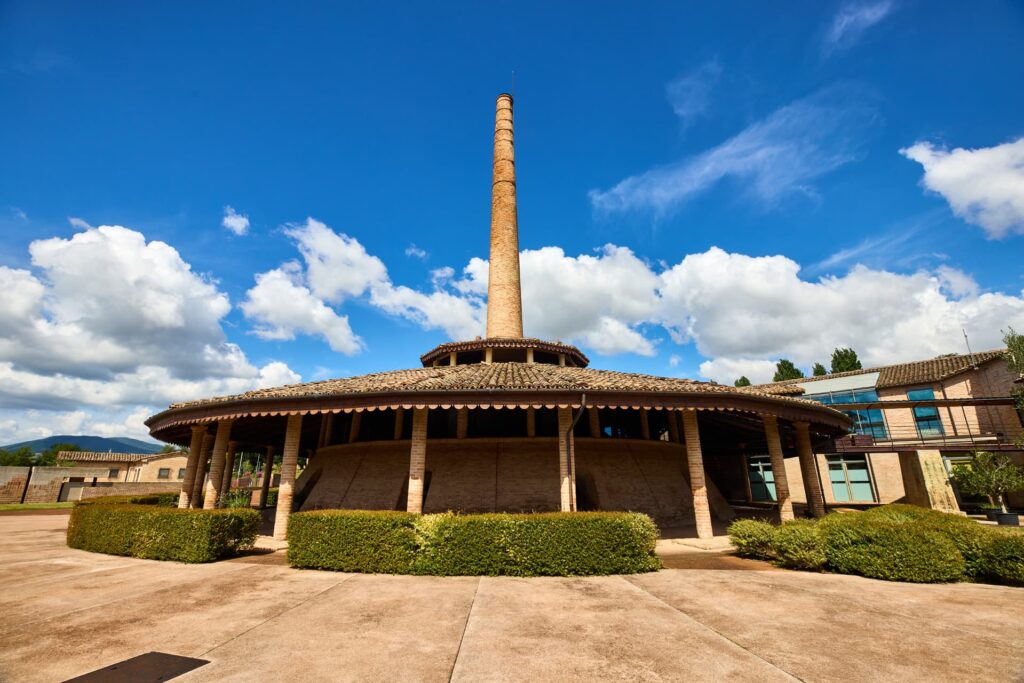
Fornace Hoffman
Not far from Serra de’ Conti, on the border with the municipality of Arcevia, stands an important example of industrial archaeology: the Hoffmann Brickworks – a 19th-century Hoffmann-type brick kiln. Built in an area rich in high-quality clay and water, thanks to its proximity to the River Misa, it remained in operation from 1884 to 1971.
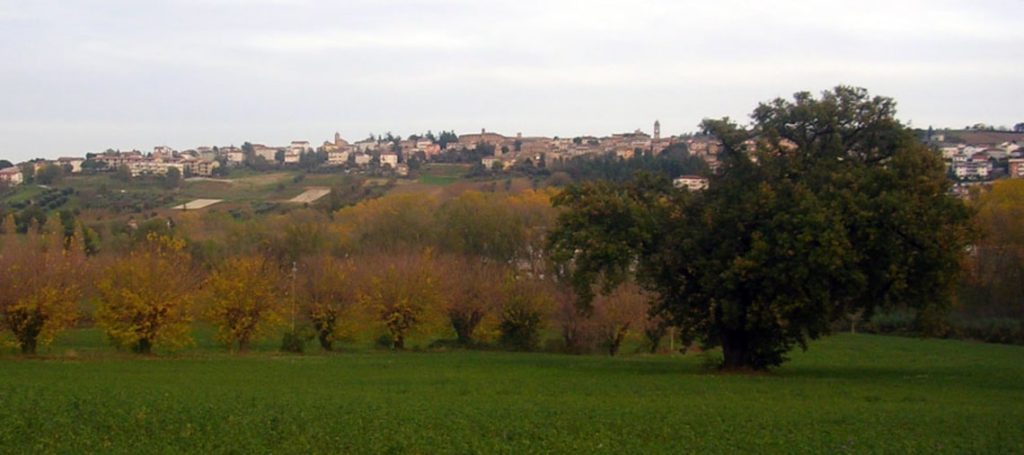
The big cerqua
In the hamlet of Osteria di Serra dei Conti, on the left-hand side of the road that runs alongside the river towards Arcevia, there stands an oak tree, remarkable for its size and stature, which is known locally as the ‘Cerqua grossa’. This tree reaches a height of 22 metres and has a diameter of around 5 metres. It is between 300 and 400 years old – a monumental tree and one of the oldest in the Marche region.

Shopping
The historic center of Serra de' Conti also offers some small commercial establishments that retain the charm of the artisan tradition and hospitality of yesteryear. Among these stand out the historic Forno Olivetti, which bakes fresh bread and pastries every day, and Luana Intimo, with its assortment of high-quality clothing and items. Numerous other shops and shops enrich the visiting experience, inviting you to discover products and stories related to the area.
-
Fenucci Luana
Corso Roma, 23, 60030 Serra de' Conti AN - Tel: 0731 879970 -
Olivetti Oven
Via Leone Amici, 1, 60030 Serra De' Conti AN - Tel: 3792147974 -
I Fiori di Mary e Mascia
Piazza G. Leopardi, 13, 60030 Serra de' Conti AN - Tel: 0731 97442 -
Ceresani Perfumery
Corso Roma, 38, 60030 Serra De' Conti AN - Tel: 0731 879438
Taste
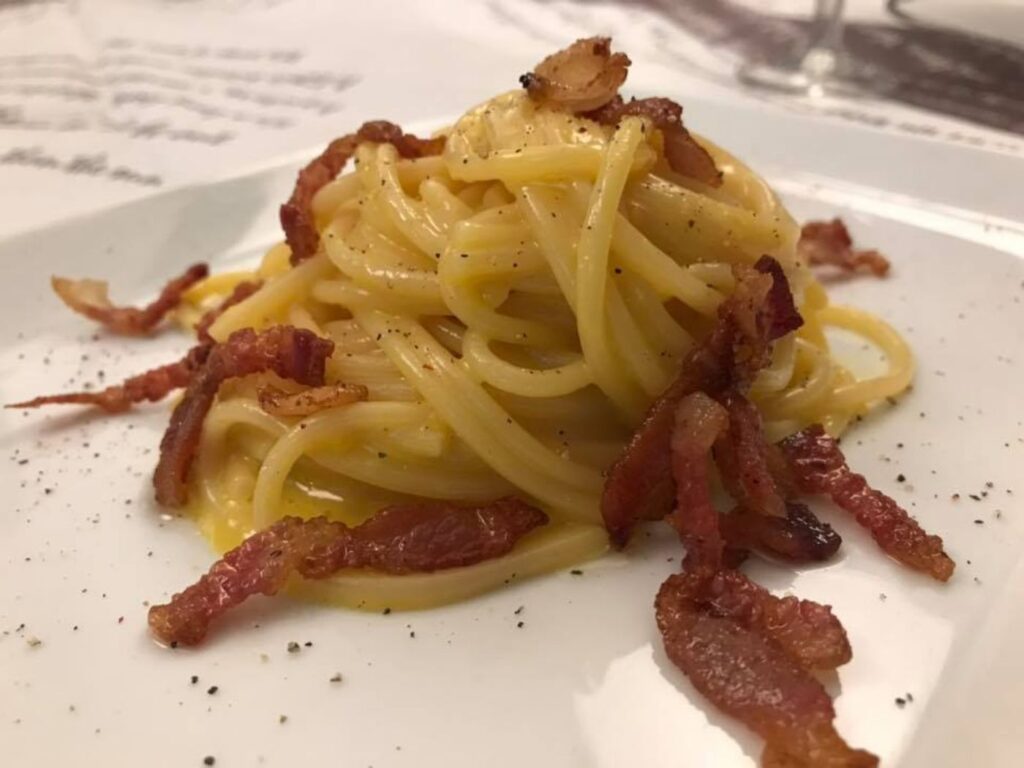
During or at the end of the itinerary to discover Serra de' Conti you can allow yourself a pleasant break in the name of local flavours. You can stop for coffee at one of the downtown bars, such as Bar Italia, or enjoy traditional Marche dishes at recommended restaurants, including L'Infinito Country House and Il Convivium, where local produce and home-cooked cuisine reveal another authentic face of Serra de’ Conti.
-
Bar Italia
Corso Roma, 72, 60030 Serra De` Conti, AN 72, Serra De'Conti, Ancona, 60030 - Tel: 0731879410 -
Convivium
Via Madonna del Piano 37, Serra de' Conti, Ancona , 60030 - Tel: 0731879679 -
L’Infinito Country House
Via Fornace 4, Serra de' Conti, Ancona , 60030 - Tel: 0731879424 -
La Fonte Agriturist
Via Farneto 18, Serra de' Conti, Ancona , 60030 - Tel: 0731878249 -
La Tana Del Ghiro
Via Sant'Antonio 27, Serra de' Conti, Ancona , 60030 - Tel: 0731879825 -
Mordi & Fuggi
Via Severino Memè 6, Serra de' Conti, Ancona , 60030 - Tel: 0731879654 -
Villa Honorata
Via Carrara 5, Serra de' Conti, Ancona , 60030 - Tel: 0731879029
Other Information
Categories
Itinerario
CONO.S.C.I.AMO.CI - conoscere, Serra De` Conti, con intraprendenza, amore e civiltà - CUP C26G25000000009 - Questo intervento è stato realizzato con il contributo di 45.000e dell’Unione europea Bando POR FESR Marche 2021-2027 - Asse 1 - Azione 1.2.2 - Int. 1.2.2.2 Bando per “Servizi digitali integrati”



