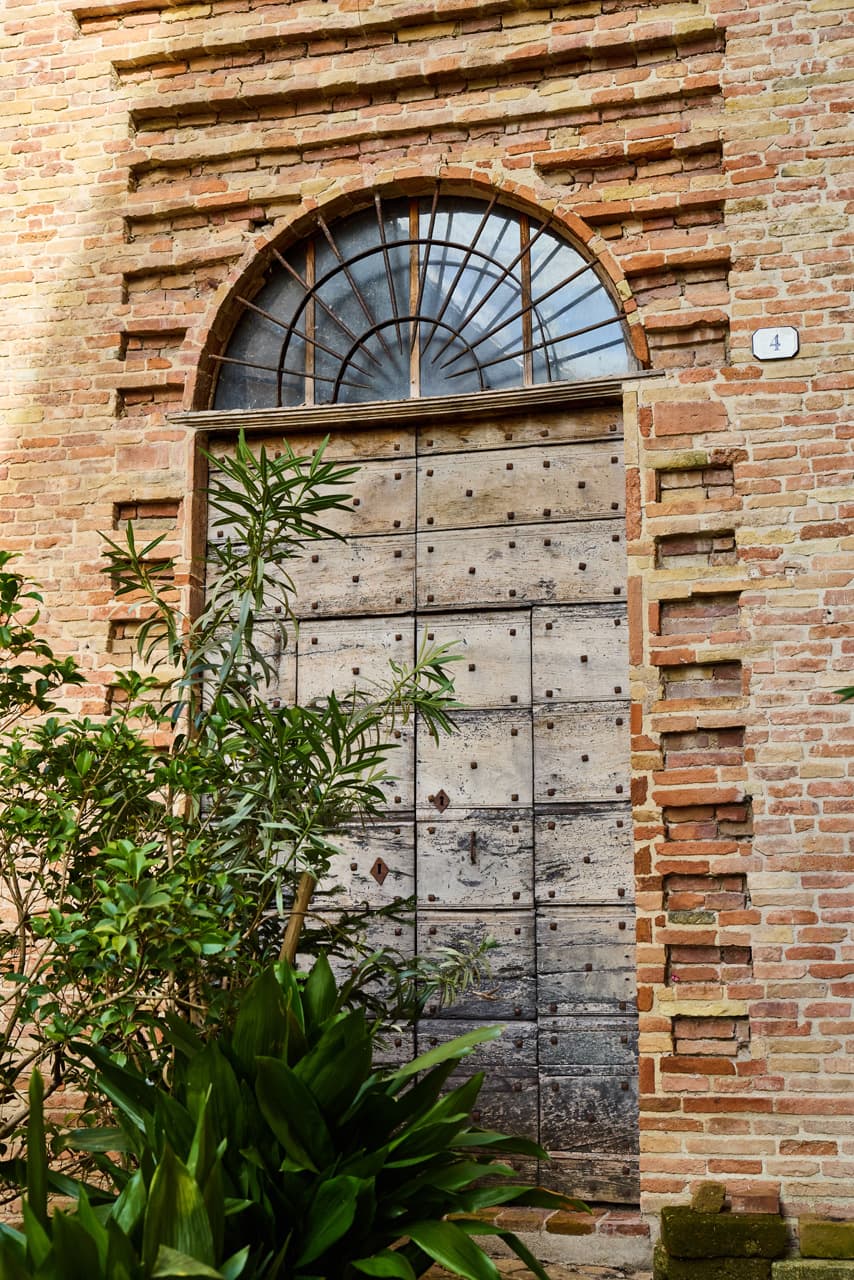


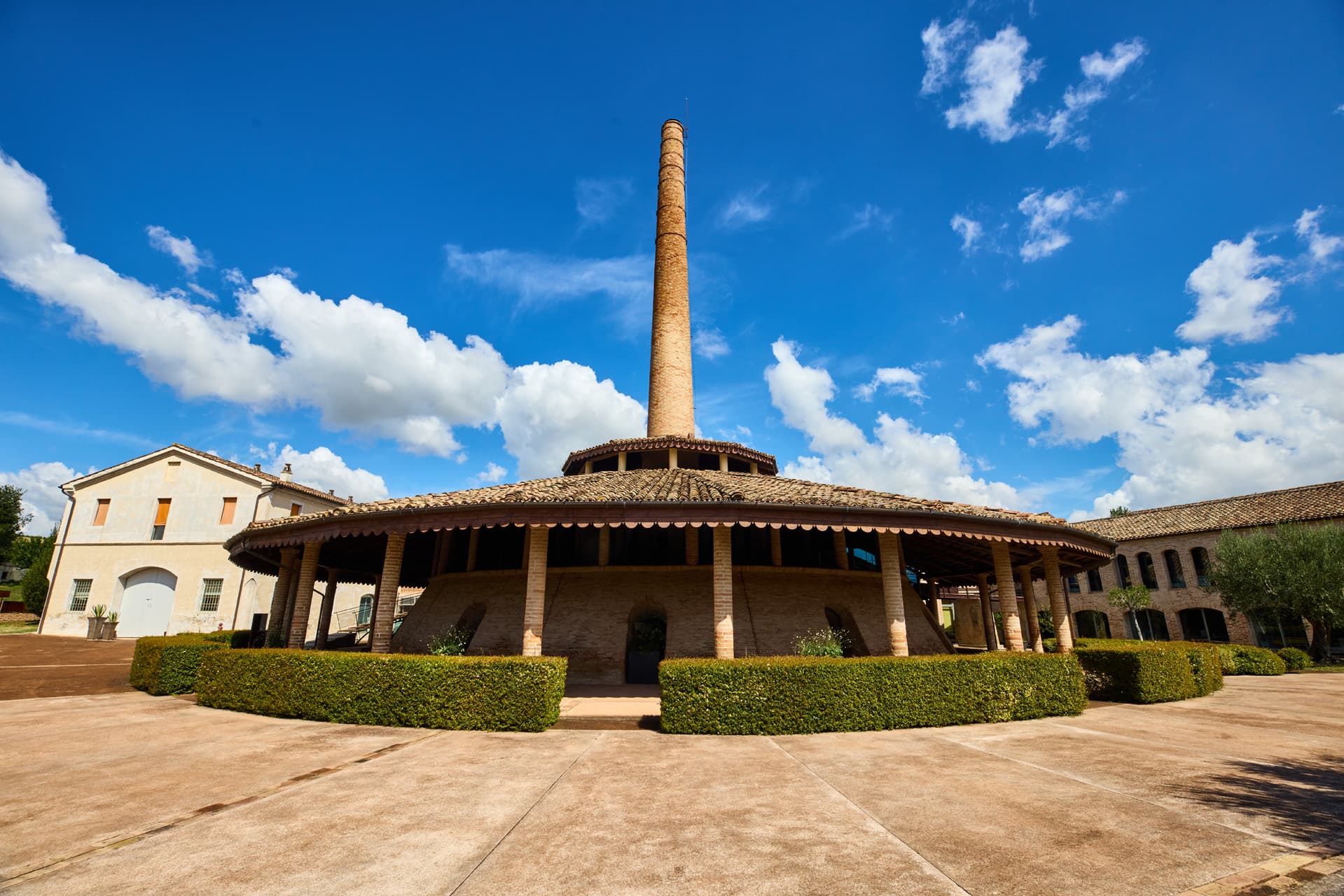
Monastery of Santa Maria Maddalena
The current complex of the Monastery of Santa Maria Maddalena stands on the ruins of a pre-existing building documented since the first half of the 14th century and abandoned at the beginning of the following century due to precarious structural conditions. However, the assets remained, which later became part of the patrimony of the Curia of Senigallia, while a considerable bequest, the Piccini inheritance, was directly managed by the Fabbrica di San Pietro.
In the second half of the sixteenth century, a community of Poor Clare nuns from Pesaro promoted the reconstruction of the religious complex together with the Municipality of Serra De’ Conti, after having obtained the interest of Pope Gregory XIII. He, with “Breve” of 1574, urged the Curia of Senigallia to separate the lands of the Monastery of S. Mary Magdalene, also ordering the restitution of the Piccini inheritance to the Municipality of Serra De’ Conti for the reconstruction of the monastic complex. The work was completed in 1586 and the monastery was once again inhabited by young cloistered nuns who were instructed by three nuns sent specifically by the Poor Clare monastery of Saint Lucy of Arcevia. Having become rich and noble over the years thanks to the dowries of the novices and the bequests of the local noble families, he distinguished himself from the Monastery of San Carlo Borromeo, founded in the second decade of the seventeenth century and intended to welcome the less well-off postulants. In the second half of the 17th century, work began on modernizing the premises; in 1726, the adjacent Palazzo Palazzi (now the town hall) was purchased, soon incorporated into the monastic complex. A serious blow was dealt to the life of the community by the Napoleonic suppressions of 1810, following which some nuns took refuge in the noble house of the Honorati, while others returned to their families. Although furnishings and furnishings were saved by renting them to front men, this was nevertheless a period of destruction, sales, and disposals; only the numerous everyday objects were saved. In 1823 the nuns returned to the monastery to face, a few decades later, a further dramatic moment due to the new suppressions of religious orders, which occurred in 1861 following the unification of the Kingdom of Italy. They lost the property, but managed to preserve the residence which, although reduced in space, could also house eleven Poor Clares from the suppressed monasteries of Belvedere Ostrense and Ostra. In 1902 the nuns purchased the portion of the building where they lived from the municipality, but shortly thereafter, with the outbreak of the First World War, they were ordered to move to Arcevia by order of the bishop of Senigallia. On that occasion the entire town rose up and there is still a memory of a stone-throwing attack against the carriages that came to pick up the nuns, who, thanks also to the intervention of the town’s inhabitants, managed not to abandon the monastery. With great historical awareness they were able to preserve the movable heritage, rejecting the pressing demands of the antiques market. In the Monastery of S. Between the end of the 19th century and the first quarter of the following century, Mary Magdalene lived as a nun of African origin, freed from slavery by an Italian priest. Zeinab Alif, a Sudanese woman, arrived in Italy at the age of ten and was entrusted to the care of the Poor Clares of the Monastery of Belvedere Ostrense, where she was baptized with the name Maria Giuseppina Benvenuti, taking the surname of her godmother. Consecrated in the Order of St. Chiara remained in Belvedere until 1894 when, due to the suppression of the convent, she had to move to Serra de’ Conti at the Monastery of S. Mary Magdalene, where she became Vicar, Mistress of Novices and finally Abbess. The “Moretta”, as she was called, put her training not only spiritual but also musical at the service of the Poor Clare community, expanding her reputation as an excellent organist even outside the monastic walls. He died on the evening of April 24, 1926, after a life entirely spent on evangelical values. In 1987, the Cause for Canonization was initiated.
Gallery
Where
Scan the QR code
To reach the point of interest
Via Guglielmo Marconi 4
Distance by car: 30 min RaggiungiContacts
Address
Via Guglielmo Marconi 4
Other Information
Categories
Monumento, Storico
You might also be interested
CONO.S.C.I.AMO.CI - conoscere, Serra De` Conti, con intraprendenza, amore e civiltà - Questo intervento è stato realizzato con il contributo dell’Unione europea Bando POR FESR Marche 2021-2027 - Asse 1 - Azione 1.2.2 - Int. 1.2.2.2 Bando per “Servizi digitali integrati”



